Why Wood Choice Matters
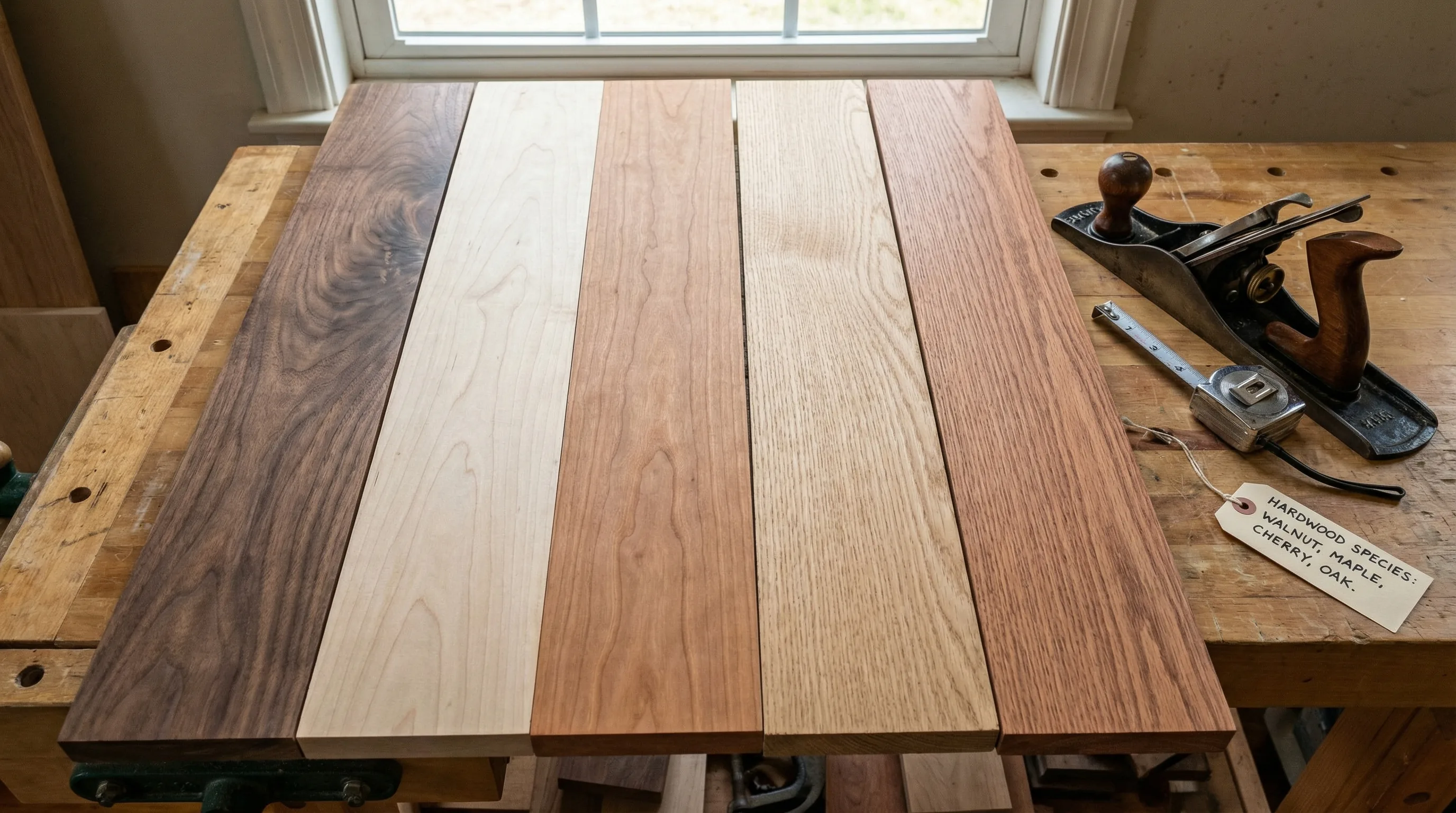
The type of hardwood used in a woodworking project is one of the most important decisions in the entire build. Different species offer different strengths — from the tight, fine grain of maple to the rich, dark warmth of walnut. The right wood affects how the finished piece looks, how it performs, and how long it lasts.
At Stocksdale Custom Woodworking, we use exclusively American hardwoods sourced from domestic suppliers. We believe in building with the best materials our country produces — and we want our customers to understand what goes into their pieces and why.
This guide breaks down the most popular hardwoods we work with, their characteristics, and which products they’re best suited for.
Maple: The Workhorse
Maple is one of the hardest and most durable domestic hardwoods, making it an excellent choice for products that see daily use.
Characteristics
- Color: Light, creamy white to pale yellow with a subtle grain pattern
- Hardness: Very hard (Janka rating: 1,450 lbf for hard maple)
- Grain: Fine, uniform, and tight
- Workability: Machines well, takes finishes beautifully
Best For
Maple is our go-to recommendation for cutting boards and charcuterie boards. Its tight grain resists bacterial penetration, its hardness stands up to knife edges without excessive scarring, and its light color provides a clean, classic look that complements any kitchen.
Maple also works well for coat racks and custom pieces where durability is a priority.
Things to Know
Maple can be slightly more difficult to stain evenly due to its density — it tends to absorb stain unevenly, creating a blotchy appearance. For stained projects, we use pre-stain conditioners and techniques developed through years of experience to ensure a consistent, beautiful result.
Walnut: The Statement Maker
Black walnut is the crown jewel of American hardwoods. Its deep, rich color and dramatic grain make it a favorite for display pieces and projects where visual impact matters.
Characteristics
- Color: Deep chocolate brown to dark purplish-brown, often with lighter sapwood streaks
- Hardness: Moderately hard (Janka rating: 1,010 lbf)
- Grain: Open, flowing, and highly figured — often with swirls, knots, and character
- Workability: Excellent. Cuts, sands, and finishes beautifully
Best For
Walnut shines in decorative pieces, custom flags, and premium cutting boards. Its natural dark color often eliminates the need for staining — a clear finish lets the wood’s inherent beauty speak for itself. Many customers choose walnut for charcuterie boards specifically because the dark surface creates a stunning contrast with cheeses, meats, and garnishes.
Things to Know
Walnut is softer than maple, so it will show knife marks more readily on a cutting board. For boards that see heavy daily use, maple may be a better choice. For boards used primarily for serving and entertaining, walnut is hard to beat.
Cherry: The Warm Classic
American cherry is prized for its warm, reddish-brown color that deepens and enriches over time — a process woodworkers call “patina development.”
Characteristics
- Color: Light pinkish-brown when freshly cut, deepening to a rich, warm reddish-brown over months and years
- Hardness: Moderate (Janka rating: 950 lbf)
- Grain: Fine, straight, and uniform with a natural luster
- Workability: Excellent — sands smooth and takes finish beautifully
Best For
Cherry is a beautiful choice for custom pieces, ornaments, and decorative items where its warm tone and aging characteristics can be fully appreciated. It’s also popular for cutting boards and charcuterie boards, particularly when combined with maple or walnut in a multi-wood design.
Things to Know
Cherry’s color evolution is one of its most distinctive features — and it happens naturally through exposure to light. A freshly built cherry piece will look noticeably different a year later, having developed a deeper, richer tone. This is a feature, not a flaw, and it’s one of the reasons woodworkers and collectors love this species.
Oak: The Traditional Favorite
Oak has been a staple of American woodworking for centuries. It’s strong, widely available, and has a distinctive grain pattern that gives it immediate visual presence.
Characteristics
- Color: Light tan to medium brown (red oak) or light golden-brown (white oak)
- Hardness: Hard (Janka rating: 1,290 lbf for red oak, 1,360 lbf for white oak)
- Grain: Pronounced, open grain with visible rays and pores
- Workability: Good, though the open grain requires more finish to seal
Best For
Oak is excellent for flags, coat racks, and structural pieces where its pronounced grain adds texture and character. White oak in particular is valued for its water resistance, making it a strong choice for projects that may encounter occasional moisture.
Things to Know
Oak’s open grain means it absorbs stain readily, which makes it easy to achieve deep, consistent color. However, the same open grain makes it less ideal for cutting boards, as the pores can harbor bacteria. For food-contact surfaces, we typically recommend maple or walnut instead.
Multi-Wood Designs
Some of our most striking pieces combine multiple wood species in a single design. The contrast between light maple and dark walnut, or the warmth of cherry against the neutrality of maple, creates visual depth that you simply cannot achieve with a single species.
Multi-wood cutting boards and charcuterie boards are among our most popular products — and for good reason. Each one is a unique composition of color, grain, and texture.
How to Choose
When selecting wood for your custom project, consider these factors:
- Purpose — Will the piece see daily use (choose harder woods) or serve primarily as decor (choose for aesthetics)?
- Color preference — Do you prefer light, neutral tones (maple) or rich, dark warmth (walnut)?
- Environment — Where will the piece live? Kitchen, wall, shelf, office?
- Budget — Walnut and cherry are premium species; maple and oak tend to be more accessible.
- Longevity — All of these hardwoods last decades with proper care. The “right” choice is the one you’ll enjoy looking at and using every day.
Let Us Help You Choose
Not sure which wood is right for your project? That’s exactly why we’re here. We’ve worked with all of these species extensively and can recommend the best option based on your intended use, aesthetic preferences, and budget.
Ready to start your custom project? Contact us to discuss wood options, or call (877) 479-0887. We love talking about wood — it’s what we do.